


Vanilla Cake Troubleshooting Guide — 5 Common Problems and Exactly How to Fix Them
Updated: May 12
Vanilla cake sounds like it should be the easiest thing in the world. One-layer, simple flavor, nothing fancy. And yet it's one of the most common cakes home bakers struggle with — dense crumb, sunken middle, dry texture, flavor that tastes like nothing. If that sounds familiar, you're not alone and you're not doing anything wrong. Vanilla cake is deceptively finicky, and most recipes don't tell you why things go wrong or how to fix them.
I've made every single one of these mistakes in my own kitchen. This post covers the five most common vanilla cake problems and what's actually causing them — plus I put together a free troubleshooting guide with all ten problems, the exact fixes, and a pre-bake checklist you can reference every time you bake. Grab it free here.
The Most Common Vanilla Cake Problems
Before we get into fixes, here's the most important thing to know: almost every vanilla cake problem comes down to one of three things — temperature, technique, or timing. Get those three right and most problems disappear on their own.

Why Is My Vanilla Cake Too Dense?
Dense cake is the number one complaint I hear from home bakers, and it almost always comes down to one of two things — cold ingredients or overmixing.
When your butter, eggs, and milk go into the batter cold, they don't emulsify properly. Instead of creating a smooth, airy batter, they create a heavy one that bakes up dense and tight. Pull everything out of the refrigerator 30–45 minutes before you start. That one habit fixes more baking problems than anything else I know.
Overmixing is the second culprit. Once flour hits your batter, gluten starts developing every second the mixer runs. Mix only until the flour is just combined — a few streaks are fine. The batter will come together in the pan.
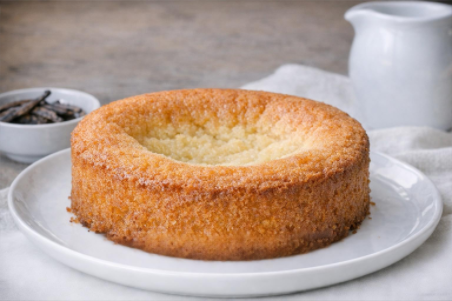
Why Did My Vanilla Cake Sink in the Middle?
A sunken middle means the center of your cake wasn't fully set when you pulled it from the oven. The outside looked done — maybe even golden — but the inside was still wet, and it collapsed as it cooled.
The fix is simple: stop trusting the timer and start trusting the toothpick. Insert it into the very center of the cake, not the edge. It should come out with just a few moist crumbs — not wet batter, not bone dry. If it's wet, give it five more minutes and check again.
One more thing — resist opening the oven door until at least three quarters of your bake time has passed. Cold air rushing in can cause the center to sink even if the cake was on track.
Why Is My Vanilla Cake Dry?
Dry cake is almost always overbaking, and overbaking is almost always caused by one of two things — an oven that runs hot, or too much flour in the batter.
Home ovens are notoriously inaccurate. An oven that reads 350°F can actually be running at 375°F or higher, and that extra heat pulls moisture out of your cake faster than the recipe accounts for. An oven thermometer is a $10 fix that takes the guesswork out of every bake.
For flour — never scoop directly from the bag. Scooping packs the flour and can add 20–30% more than the recipe calls for. Spoon flour into your measuring cup and level it off, or better yet, use a kitchen scale.
Why Does My Vanilla Cake Taste Bland?
Flat flavor usually comes down to two things — vanilla extract quality and salt.
Imitation vanilla extract is significantly weaker than pure vanilla extract and has a slightly artificial aftertaste most people can detect without knowing why. Pure vanilla extract is worth the extra cost, especially in a cake where vanilla is the entire point. And if your recipe calls for a small amount of almond extract, don't skip it — it amplifies vanilla into something that tastes genuinely bakery-level.
Salt is the other culprit. Salt doesn't make things taste salty — it makes everything else taste more like itself. Under-measuring salt by even a small amount flattens the flavor of the entire cake. Measure it carefully every time.

Why Is My Frosting Melting Off?
This one has a simple cause and a simple fix — your cake was still warm when you frosted it.
Even slightly warm cake will melt buttercream on contact. The frosting softens, loses structure, and slides. It can feel like a frosting problem but it's almost always a cooling problem.
Cool your layers completely at room temperature — at least one to two hours — before you touch them with frosting. If you're short on time, 30 minutes in the freezer works well. Then apply a thin crumb coat, refrigerate for 15 minutes, and apply your final coat. That crumb coat step is what separates a clean finish from a crumby one.
Get the Full Vanilla Cake Troubleshooting Guide — Free Download
These five problems are the most common — but there are ten in total, and the remaining five trip up even experienced bakers. I put all of them into a free one-page guide you can save and reference whenever you bake.
Each problem includes why it happens, the exact fix, and a pro tip from my own kitchen. There's also a pre-bake checklist at the bottom — run through it before every bake and you'll catch most problems before they happen.
No lengthy recipes to dig through. Just the problem, the cause, and the fix.
Three Things That Prevent Most Cake Problems
If you only change three habits, make it these:
Room temperature ingredients. Pull your butter, eggs, sour cream, and milk out 30–45 minutes before you start. Cold ingredients don't emulsify and the batter shows it.
Measure flour correctly. Spoon it into your measuring cup and level off the top. Never scoop from the bag. If you bake regularly, a kitchen scale is the most useful $15 you'll spend — it removes all measuring guesswork entirely.
Know your oven. Pick up an oven thermometer and leave it in there. Check it the next time you preheat. If your oven runs hot or cool, adjust your temperature accordingly. This single habit will improve every single thing you bake — not just cake.
More Cake Resources
Looking for more birthday cake ideas? Check out my Ultimate Birthday Cake Guide
If you're working on your vanilla or yellow cake, these posts will help:
Fluffy Moist Vanilla Cake From Scratch — the recipe this guide was built around
The Perfect Yellow Cake Recipe — same techniques, more buttery flavor
The Best Chocolate Birthday Cake — for when you want to switch things up
Baking is a skill, and every cake that doesn't turn out the way you wanted is just information. Once you know why something happened you can fix it — and you won't make that same mistake again. The guide is there whenever you need it. Save it, share it with a baker friend, and come back to it the next time a bake goes sideways.


Comments